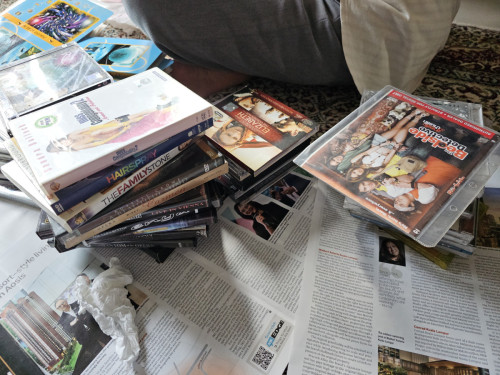
Last Saturday, I walked down the stairs to the main living room to find my parents sitting by a giant pile of CDs. When I asked what was going on, they replied that they will be throwing them out.
Thus began what I have been doing for the past two weeks.
Over the past fifty years, my family and I have accumulated a vast collection of disks, from the 1980s till today. They range from from the musicals my dad loved to my mother's religious songs to my siblings' music CDs and my childhood movies, plus everything in-between.
But with all of us moving out and my parents entering their golden years, they have decided to clear out some drawers and shelving space that are cluttered with stuff we all no longer use. And that includes the shelves and drawers filled with half a century of CDs.
I talked to them over breakfast and implored to save at least a few CDs that they consider sentimental or important, while also giving me the chance to archive the rest before they are thrown out. What resulted was an entire morning of sifting through albums, covers, and plastic sleeves, choosing what to keep and what to throw out.
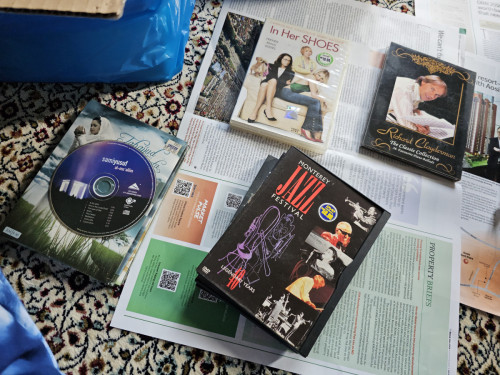
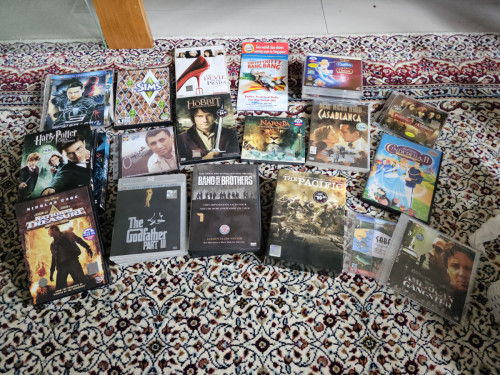
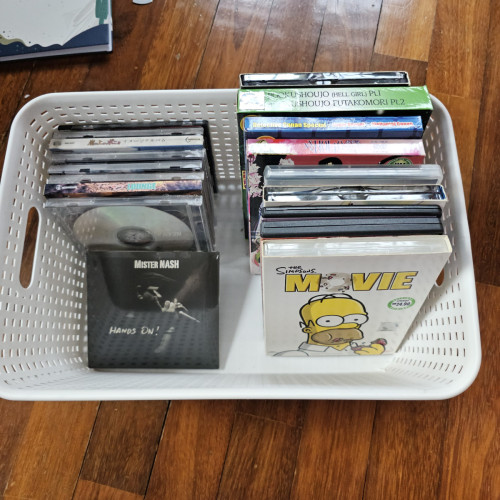
There were some surprising finds made by all of us. Mum discovered several music CDs she thought lost and dad decided to keep his collection of Band of Brothers DVDs, along with several other movies and music albums. In the end, the 'saved' collection was enough to fill half a drawer space.
But the majority of discs were decided to go. And thus I now have three large plastic hampers, full with every sort of disc imaginable. Music, musicals, albums, lectures, animes, VCDs, DVDs, and even a surprising number of plain-white discs that nobody knows contain what.
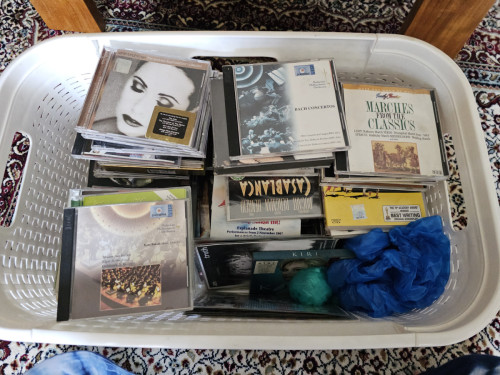
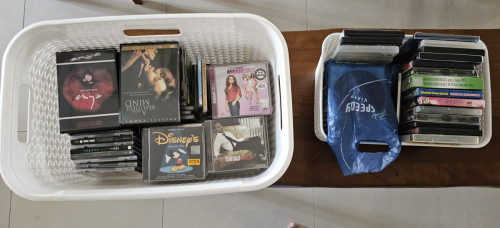
And ever since, I have been ripping and saving as much music and video as I can into my laptop. After work, I will switch on my laptop and immediately insert a disk, as the ripping process can take up to an hour (more so if the disc is scratched). I have found some surprises too, such as CDs about Spanish folk music or an Australian acapella group with their own signatures on the disc!
Needless to say, these CDs and several more have gone to my own personal collection of 'saved' disks. If a CD looks and sounds distinctive, melodious, or just plain rare and interesting, I'll save them and form my own library. Now, I have CDs ranging from Arabic music to Spanish folk to local artists and even an Aidilfitri/Eid album by Malaysia's highway company!
It's been an experience looking through all these disks, but also a tiring one. There have been CDs that won't launch and instead cause unbearable noises while inside the CD player. There are movies I remembered loving that couldn't be saved, albums that couldn't be ripped, and memories that couldn't be replayed. Sadly, I have no choice but to relegate them to the dust bin.
But it's also worth it, because my music and movie library is now growing ever fuller with the songs and flicks my family has loved. And I think that is worth archiving.
![[personal profile]](https://www.dreamwidth.org/img/silk/identity/user.png)
![[community profile]](https://www.dreamwidth.org/img/silk/identity/community.png)







.jpg)